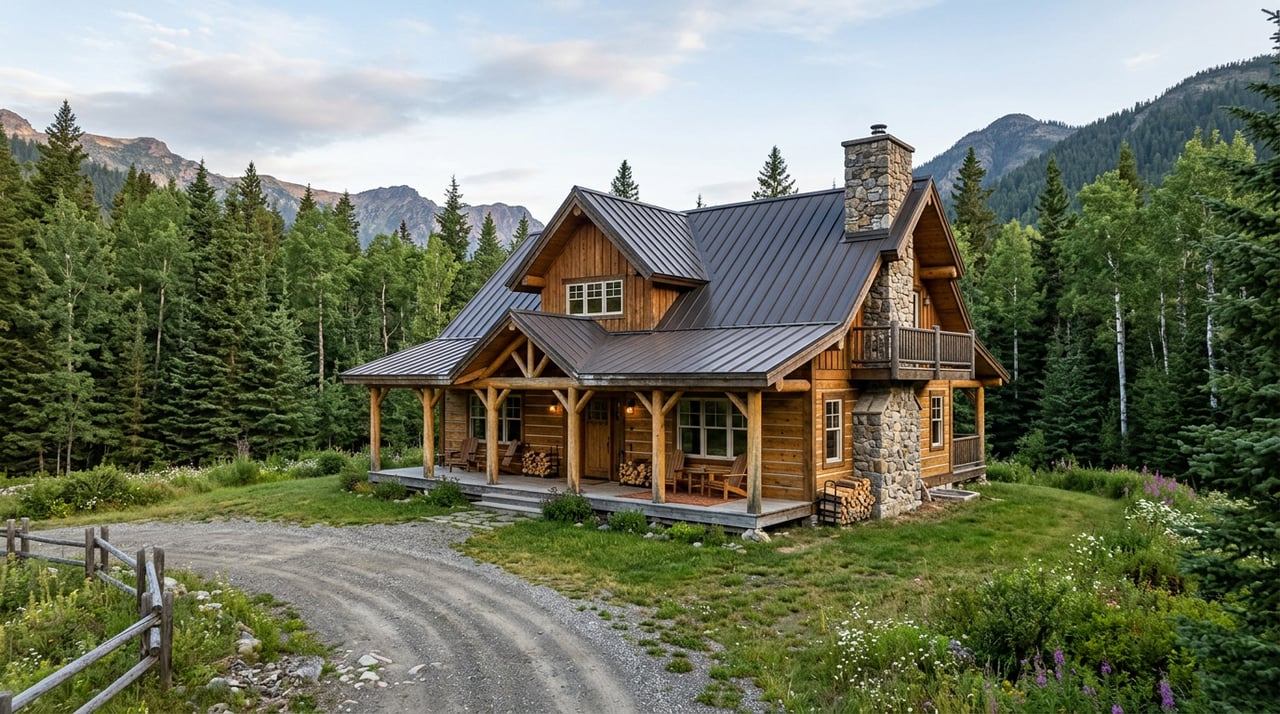
Buying Land Near Eureka, Montana: Well and Septic Approvals
September 24, 2026
September 24, 2026
What does that phrase actually guarantee when you see it under a photo of ten wooded acres outside Eureka?
If you have spent any time scrolling land listings near Lake Koocanusa, you have seen the phrase before. A parcel outside Eureka, a shared well already drilled, the listing note reading something close to "septic system is approved for installation." It shows up again and again across McShea's Meadow, North Star Landing, and the acreage bordering the Wilderness Club. The wording sounds like a green light. In practice it is closer to a permission slip that still needs a signature, and the signature depends on a detail almost nobody asks about before they write an offer: how the parcel was created.
That detail, not the acreage number on the listing, decides how much work is actually left before a septic system can go in the ground.
"Approved" in a Montana land listing usually points to one of two documents. The first is a Certificate of Subdivision Approval, or COSA, issued by the Montana Department of Environmental Quality. A COSA describes the approved use of the property, the water source, and where wastewater will be disposed, and it comes with a lot layout showing exactly where the well and drainfield are supposed to sit. The second is a county-level site evaluation that assesses whether the soil on that specific spot can support a septic system at all.
Neither of those documents is the same thing as an installation permit. Lincoln County's Health Department is explicit on this point: a local wastewater treatment system permit is always required before a system is installed, no matter which approval already exists on paper. A COSA or a prior site evaluation gets you in the door. It does not let you skip the door.
This matters most when a lot layout was approved years ago and a buyer assumes the paperwork is done.
Most buyers who research this topic land on a simple rule: parcels under 20 acres need state or county sanitation review before they can be sold as separate lots. That rule is real. Montana's Subdivision Program reviews any division of land under 20 acres specifically to confirm that water supply, sewage disposal, and drainage can actually be built and maintained on each new lot.
The part that catches buyers off guard is what happens after a parcel clears that line. As Gallatin Septic explains, a 25-acre lot bought free and clear of subdivision review can still get pulled back into review later, if it is resurveyed or split again and the resulting pieces fall under 20 acres. The exemption belongs to the parcel as it existed at creation, not to the acreage number printed on a listing today. Buyers assessing land near Eureka, especially anyone eyeing a future split for a second homesite or a family member's cabin, should confirm exactly how and when the parcel was originally platted rather than trusting the acreage on the flyer.
Here is the practical difference between the paths a parcel can take:
| Parcel history | What review applies | What to request before you offer |
|---|---|---|
| Created under 20 acres | Sanitation review before the lot could be sold separately | Copy of the COSA and approved lot layout |
| Created over 20 acres, never resurveyed | Generally exempt from subdivision sanitation review | Confirmation of original acreage and plat date |
| Created over 20 acres, later split or resurveyed under 20 | Pulled back into review at the time of the split | Documentation of the split and any resulting COSA |
| No COSA on file, lot predates review requirements | Recent percolation test and soil profile report |
A site evaluation itself follows a specific sequence. The Lincoln County septic application calls for a test pit, typically to a depth of eight to ten feet, within 25 feet of where the drainfield is proposed. A percolation test measures how quickly water moves through the soil. Skipping straight to "the listing says approved" skips over all of this.
The second gap buyers walk into involves water rather than waste.
This shows up more often than it should on shared-well properties, which are common across Eureka's rural subdivisions. A shared well serving several lots raises a second question beyond water rights: who maintains it, and under what agreement. None of that is visible from a listing photo of a wellhead in a clearing.
Timing adds one more layer that has nothing to do with paperwork and everything to do with Montana winters. Excavation for septic installation effectively stops once the ground freezes, which pushes the practical construction window to roughly late April through October across most of the state. A buyer who closes on raw land in October, as plenty do heading into hunting season, is not necessarily looking at a spring build. They are looking at a site evaluation that may not get scheduled until the following construction season, and a permit process that runs on the county's calendar, not the buyer's.
That is worth knowing before you write an offer with a short due diligence window on unimproved land, particularly if the plan involves breaking ground the same year you close.
The Lincoln County Health Department puts the underlying rule plainly on its own permitting page: a local wastewater permit is always required before a system is installed, non-public or public.
A short list, worth working through with whoever represents you before you go under contract on wooded acreage near Eureka:
None of this is a reason to walk away from Eureka's land inventory, which remains one of the more accessible paths into Northwest Montana ownership, whether the goal is a hunting property, a build site near the Wilderness Club's Nick Faldo-designed course, or a quiet parcel backing onto Kootenai National Forest. It is a reason to read "approved" as a starting point rather than a finish line, and to build your timeline around the actual permitting sequence instead of the listing copy.
If a lot already has a COSA, do I still need a separate septic permit? Yes. A COSA or prior subdivision approval does not replace the local permit required before installation. You still need to apply for and receive a permit from the county before construction begins.
Can I install my own septic system to save money? The system still has to be permitted before installation, regardless of who does the physical work.
Does buying inside a private community like the Wilderness Club change any of this? The same state and county sanitation rules apply to land inside private communities. What can differ is whether infrastructure like shared wells or centralized systems has already been engineered for the subdivision as a whole, which is worth confirming directly for any specific lot rather than assuming it matches a neighboring parcel.
If you are looking at acreage near Eureka and want a clear read on what a specific parcel's paperwork actually says before you write an offer, that is exactly the kind of groundwork Erin Gilley walks buyers through, well before closing day. Request a free home valuation and consultation to start with the questions that matter most for your parcel.
This article is general information, not legal, tax or financial advice. Consult a qualified professional about your situation.
Stay up to date on the latest real estate trends.
Erin’s passion for adventure extends into real estate. Whether it's renovating a fixer-upper or turning a vacation rental into something special, Erin’s creativity and hands-on approach ensure that every property is an opportunity to create something unique.