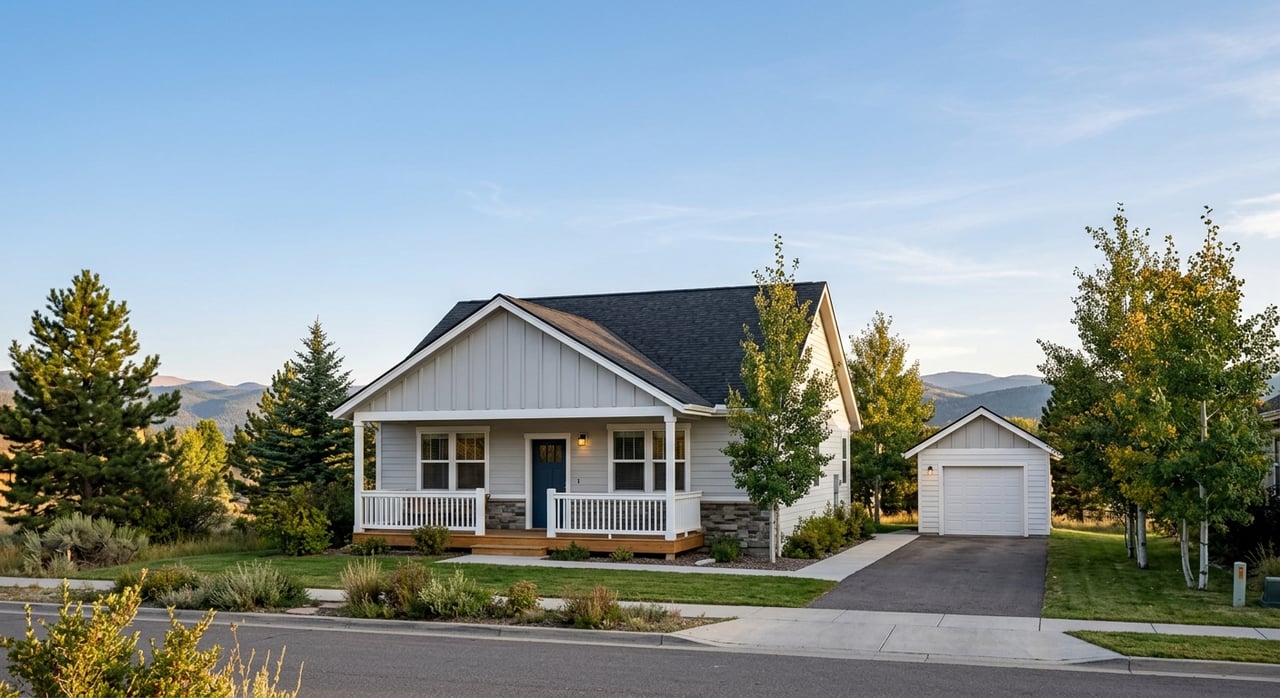
Investing in Eureka MT Real Estate: How to Evaluate Deals
April 16, 2026
April 16, 2026
Thinking about buying an investment property in Eureka? In a market this rural and recreation-driven, the numbers alone rarely tell the full story. If you want to evaluate property like a smart investor, you need to look at cash flow, access, utilities, seasonality, and local regulations together. Let’s walk through what really matters when you size up an opportunity in and around Eureka.
Eureka is not a typical metro investment market. The town describes itself as surrounded by the Kootenai National Forest, and the area’s identity is closely tied to year-round outdoor recreation. The Town of Eureka and the U.S. Forest Service’s Lake Koocanusa Scenic Byway overview both point to boating, hiking, fishing, camping, and other seasonal draws that shape demand.
That setting can create opportunity, but it also changes how you underwrite a deal. In a place like Eureka, parcel quality, views, access, and utilities can carry more weight than they would in a larger city. Investors often do best when they match the property’s use to the area’s recreation calendar, road access, and development rules.
Before you analyze any one property, it helps to understand the broader setting. Lincoln County QuickFacts show a 2024 population estimate of 22,184, with just 5.4 people per square mile. The same source lists a median household income of $47,143, median gross rent of $762, and median owner-occupied home value of $296,500.
Eureka itself has also grown over time. Census data cited in the research show the town rose from 1,037 residents in 2010 to 1,380 in 2020. That growth matters, but this is still a very small market where inventory, pricing, and demand can move differently than in larger Montana hubs.
Current listing data also suggests a slower market pace. According to Realtor.com’s Eureka market page, February 2026 showed 143 homes for sale, a median listing price of $639,000, a median 185 days on market, and a 96% sale-to-list ratio. Realtor.com also labeled Eureka a buyer’s market, which is an important clue for investors thinking about resale timelines.
Most investors begin with one question: will this property cash flow? In and around Eureka, that answer can be harder to pin down than in a larger rental market.
Rental data are sparse. The research report notes that Realtor.com showed only 2 rental listings, while county median gross rent was $762, based on Census QuickFacts and Realtor.com local market data. That makes it harder to build a long-term rental projection with confidence.
For that reason, you should be cautious about assuming strong year-round rental income unless the property has a very clear use case. A lower purchase basis, strong amenity appeal, or a realistic seasonal strategy may be needed to make the numbers work. In this market, investors often need to stress-test income assumptions more carefully than they would in an area with deeper rental comps.
In Eureka, your purchase price is only part of the story. You also need to think about how easy it may be to sell later.
With a median 185 days on market, exit liquidity deserves serious attention. If you may need to refinance, reposition, or sell in a few years, you should evaluate whether the property will appeal to the next buyer pool, not just to you today.
That is especially true in a small rural market. Broad appreciation trends may be less predictable than in a larger employment-centered city, so investors often focus on assets with durable features such as good access, usable land, attractive views, utility readiness, and solid condition. Those are the kinds of traits that can help a property stand out when inventory is competing for a limited buyer base.
Raw land and cabin projects can look appealing around Eureka, but they often require more due diligence up front. This is one of the biggest places where investors can protect themselves.
Lincoln County Planning states that it administers subdivision regulations, floodplain regulations, lakeshore construction regulations, and buildings for lease or rent, while also consulting with the health department on water and sanitation. The same planning page shows that subdivision rules, buildings for lease or rent rules, and road and fire-protection standards are actively being revised.
That is a strong signal to verify buildability early. If you are buying land, a cabin, or a property intended for renovation or rental use, you want to confirm what is currently allowed, what permits may be required, and whether timing could affect your plan.
Wildfire is not a side issue here. It is a major investment variable.
The U.S. Forest Service says Lincoln County ranks in the top 10% for wildfire risk to communities, notes that nearly 99% of county lands are forested, and identifies the Kootenai Complex as a Wildfire Crisis Strategy landscape. The same source says the 2017 Gibraltar Ridge Fire near Eureka burned nearly 13,000 acres and threatened homes.
For investors, this means wildfire should affect both your risk analysis and your expense estimates. You should think about defensible space, insurability, vegetation around structures, access for emergency response, and what higher insurance costs could do to your monthly numbers.
A big part of Eureka’s appeal is its access to open space and recreation. That can support demand, especially for second-home buyers, cabin buyers, and recreation-oriented purchasers.
At the same time, Lincoln County’s long-range plan says 73% of the county is federally owned. In practical terms, that can make public-land adjacency and recreation access more valuable, but it can also mean access, easements, and improvement potential need closer review.
A parcel that looks ideal on a map may still need careful confirmation of legal access and practical use. Investors often place a premium on properties with clear, documented access and a straightforward path to the intended use.
Not every property in Eureka performs the same way year-round. Seasonality can affect income, maintenance, and even access.
The Lake Koocanusa Scenic Byway is open year-round, but the west-side loop is closed in winter. The research also notes that a nearby Forest Service picnic area operates from Memorial Day through Labor Day and is weather-dependent. For an investor, that is a reminder that recreation patterns can shift by season.
If you are considering a cabin, vacation-use property, or short-term stay strategy, ask whether demand is concentrated in a narrow window. Also ask how snow, road conditions, and off-season upkeep could affect both revenue and operating costs.
Water-related risk is another item you should not gloss over. This is especially important for property near lower-lying ground, river corridors, or lake-adjacent areas.
FEMA’s community status book for Montana lists the Town of Eureka among communities participating in the National Flood Insurance Program. Lincoln County Planning also states that the county administers floodplain regulations.
That makes flood maps, elevation, site conditions, and insurance costs important pieces of due diligence. Two nearby parcels can have very different risk profiles, so it is smart to evaluate each property individually rather than relying on general assumptions.
When you evaluate a property in and around Eureka, try to look at it in layers rather than chasing one headline number.
Start with the income story. Is this a year-round hold, a seasonal play, a land-bank move, or a renovation project with resale potential?
Then review the site fundamentals. Check access, utilities, water, septic feasibility, condition, and defensible space.
Next, study the regulatory path. Confirm county rules, possible permits, and whether any updates in process could affect your timeline or intended use.
Finally, pressure-test the exit. In a slower market, it helps to buy a property that has clear strengths another buyer will value later.
In a market like Eureka, good investment decisions usually come from local context as much as spreadsheets. You need to understand not just pricing, but how roads, seasons, land-use rules, and carrying costs can shape the outcome.
That is where local guidance can save time and reduce guesswork. Erin Gilley combines boots-on-the-ground knowledge of Eureka and Lincoln County with a financing-informed, education-first approach that helps you compare properties more clearly, ask better questions early, and move forward with a plan that fits the realities of this market.
If you are weighing land, cabins, rental potential, or a value-add purchase in Northwest Montana, connecting with Erin Gilley can help you evaluate the opportunity with local insight and a practical strategy.
Stay up to date on the latest real estate trends.


Erin’s passion for adventure extends into real estate. Whether it's renovating a fixer-upper or turning a vacation rental into something special, Erin’s creativity and hands-on approach ensure that every property is an opportunity to create something unique.